I can’t tell you how many times I’ve gawked at the opening sequence to Final Fantasy VII over the years. From a three-year-old, gazing up at the intro for the first time from the carpet of my living room, to watching the camera zoom out and pan across Midgar in Final Fantasy VII Remake back in 2020, I’ve watched this cutscene in its various forms time and time again, and it never fails to amaze me.
So it shouldn’t surprise anyone that I’m in awe once more with Final Fantasy VII Remake Intergrade on Nintendo Switch 2, except this time, I’m watching the same bird fly over Midgar, the kids play in the slums, and Aerith walk through the city all on a 7.9-inch LCD screen. And I’m not just in love with the wonderful music or the perfect set-up to one of the most incredible worlds in RPGs; I’m actually amazed at how good the whole thing looks on my little Switch 2 screen.
Final Fantasy VII Remake is astonishing on Nintendo’s console, and is easily one of the best Switch 2 ports so far. Yes, there are caveats like 30fps, softer screen resolution, and some fuzzy textures. But Square Enix has clearly put the time and effort in here to ensure the best possible result, and with the Episode INTERMission DLC included as standard too, this might be the definitive way to play Remake on the go.
And that’s how I spent most of my time with it. Honestly, it’s a bit of a revelation: in both handheld and docked, Remake looks spectacular, especially when you’re exploring the iconic dieselpunk metropolis. It’s packed full of people, scrapheaps of junk, vehicles, and flowers and dead grass attempting to break through the otherwise barren grounds. I had to pinch myself a few times as I reacquainted myself with the Sector 7 Slums or the narrow alleyways of Wall Market.
Every single inch of Remake on Switch 2 is a real testament to the lighting, which director Hamaguchi-san has acknowledged as key. It makes this version appear closer to the PS5 release’s Performance Mode than the original PS4 one. I’d say that playing it docked, other than the lower frame rate and the ‘dithering’ around Cloud and other spiky-haired characters’ hair (apparently something to do with the upscaler struggling to interpret subpixel information), I wouldn’t be able to tell at first blush.
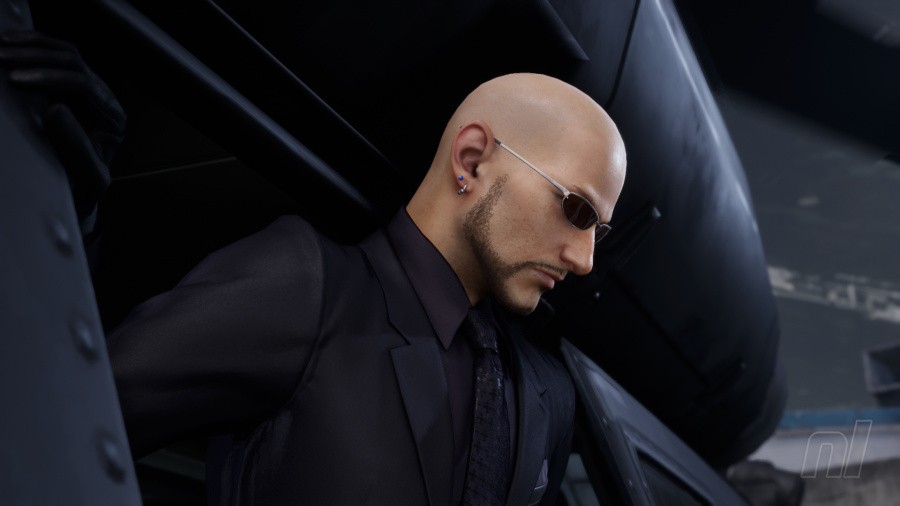
Areas like the aforementioned Slums are where those texture problems are most noticeable on flowers and scrap heaps in particular, but this is where most of the original’s texture problems were, too. NPC faces here are also a little odd-looking, but again, this is an existing problem with Remake on other platforms. Basically, you really have to be paying attention and looking for cracks, or have ludicrously high expectations.
In terms of the frame rate, while docked, I didn’t notice any significant dips at all – not in combat where I was punching and kicking my way through foes with Tifa or slicing and dicing as Cloud, nor in some of the busiest areas like Wall Market. Even the motorbike sections, where lighting and particle effects are flying around the place, nothing distracted me.
Handheld was a little less consistent, but mostly just during cutscenes and transitions when there’s fire, trains, or a lot of close-up movement. And it’s never for more than a few seconds, which I can live with when playing on a small screen. The softer image quality might also take a bit of getting used to, but again, this isn’t a high-powered PC or a PS5. And this is based on the PS5 Intergrade version anyway.
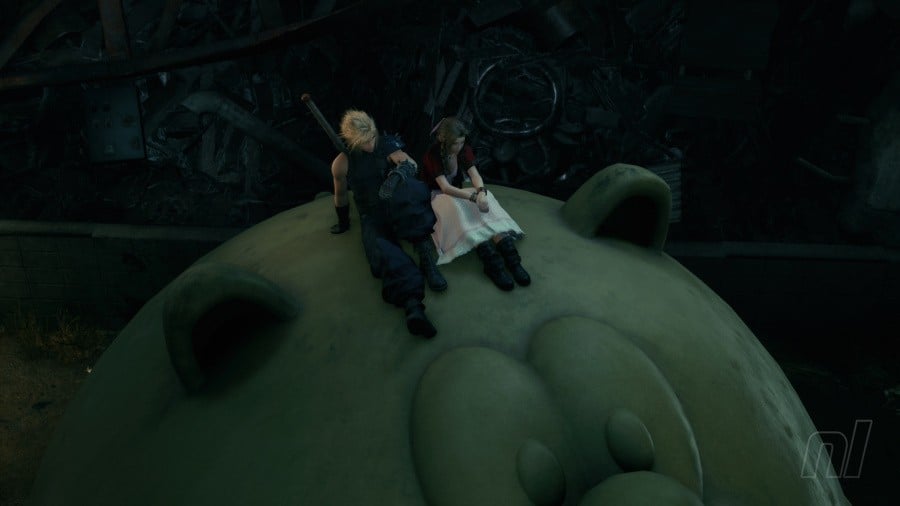
So, the port part of Remake is a huge success, and luckily, the game itself is, as well. It’s a fantastic RPG with some of the best combat in the genre, and a complete reimagining of the iconic three-to-five hour sequence of the PlayStation’s original release over 30 hours. And it works.
The action is superbly tuned, focused on utilising your entire party to take down enemies and bosses by staggering them, then dealing a huge amount of damage by using ATB-consuming skills. Every character is very different to play as, too; Tifa is excellent at putting pressure on the enemy and then dealing the big numbers once staggered, while Barret’s long-ranged gun arm can easily take down airborne enemies. You have to engage with every system in order to win, even in Normal Mode.
It’s not turn-based, which I know some purists aren’t happy with, but Remake still incorporates a little traditional RPG with a menu which allows you to briefly pause battles and select skills for you and your allies. I use a mix of menu-hopping and shortcuts, the latter of which doesn’t break up the flow of combat — helpful for Cloud and Tifa, who are almost always in the heat of action — and I also constantly switch between characters depending on the situation.
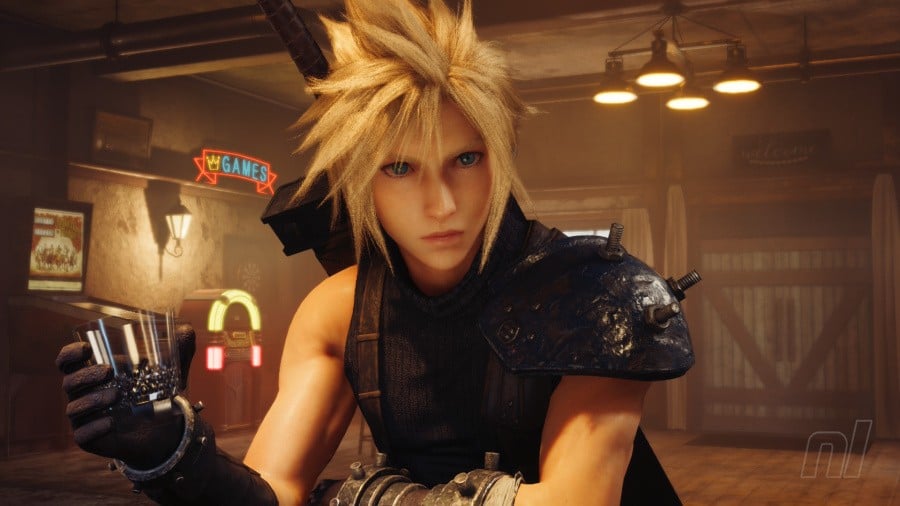
Touching on the narrative, I want to stress that, while Final Fantasy VII Remake is pretty darn faithful to the 1997 original, it also tests the boundaries of what a ‘remake’ actually is, particularly towards the end. I don’t like all of the changes, and a few of the new characters didn’t click with me at first, but when Remake nails it, it really nails it. Particularly with its characters.
If, like me, you grew up with Final Fantasy VII, it’s incredible to see this world and these characters fully realised on modern hardware. Cloud is not the mopey fellow the Compilation will lead you to believe; he actually has some snark and silliness to his character. And Aerith is just a remarkable human who carries the story of both this and Rebirth on her back – I’ve sung her praises before, and I’ll keep doing it.
And seriously, the dialogue and banter in this game can be hilarious, with Cloud’s stoicism often challenged by Aerith’s teasing, and Barret’s over-enthusiastic pleas to save the planet batted down by Cloud’s own bluntness. It knows when to balance the levity with serious moments, and that’s something I think most video games struggle with.
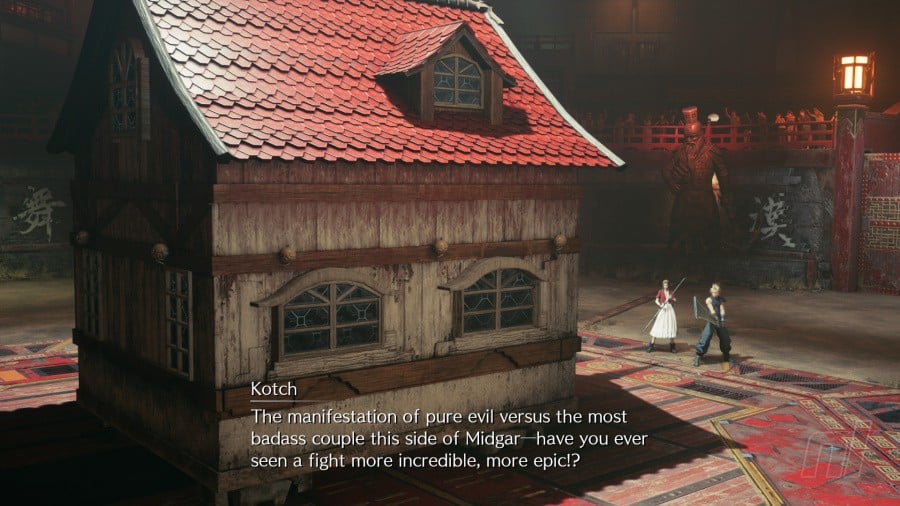
For those who haven’t touched Final Fantasy VII before and are worried, don’t fret – even with some of the additions, the Switch 2 port is still an amazing way to experience (part of) one of the most influential games of all time. The story beats are all the same, and the tone and outright weirdness of the original are also all intact, perhaps even better than ever. The new Honeybee Inn sequence alone is worth the price of admission.
While Cyberpunk 2077 is still the best port on the system due to its sheer size and scope, Final Fantasy VII Remake Intergrade is close behind for its visual detail, incredible lighting, and largely consistent frame rate.
Conclusion
Even in its attempts to swing big and do something different, Final Fantasy VII Remake Intergrade respects where it’s come from. The classic’s pro-revolutionary heart is still intact, and it’s never afraid to get a little weird and funny. The Switch 2 version makes impressively few compromises to get this gorgeous-looking game running on the system – even at 30fps, this looks and feels fantastic.
The fact that everything from the PS5 release is preserved in such excellent fashion here is remarkable, and it makes me excited (and anxious) about Rebirth’s incoming port.